





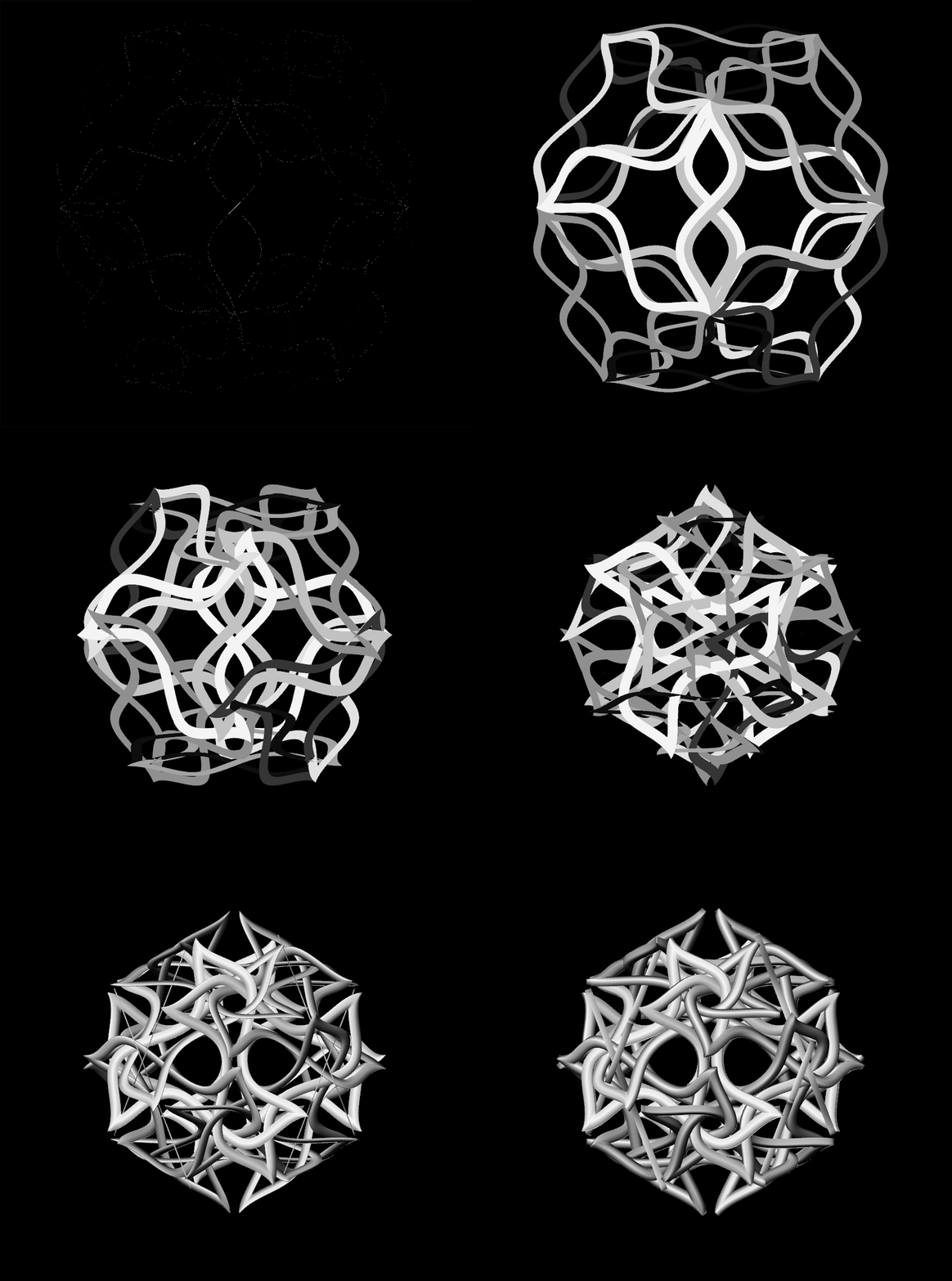

Orderly Tangle
In the 1970s and 1980s, Alan Holden described symmetric arrangements of linked polygons which he called Regular Polylinks or Orderly Tangles. The fundamental geometric idea of symmetrically rotating and translating the faces of a platonic solid is applicable to both sculpture and puzzles. The insight has been independently discovered or adapted by others, but the concept has not been widely used because any closed-form method is known for calculating the dimensions of snugly fitting parts.
The process started with making a frame out of the polyhedron. All faces are moved inwards with the central point of the original cube is used as the origin axis. Using the same origin, the faces of the geometry are then rotated along their axis at a certain degree to create the orderly tangle. The faces are then thickened to ensure all of them fixed together. The structures act on friction to hold themselves together in place. This, however, can be changed by making them interlock with each other, ensuring a stronger structure.
The system was repeated using different types of lines replacing the edges of an icosahedron with different parameters are used each time.